GED
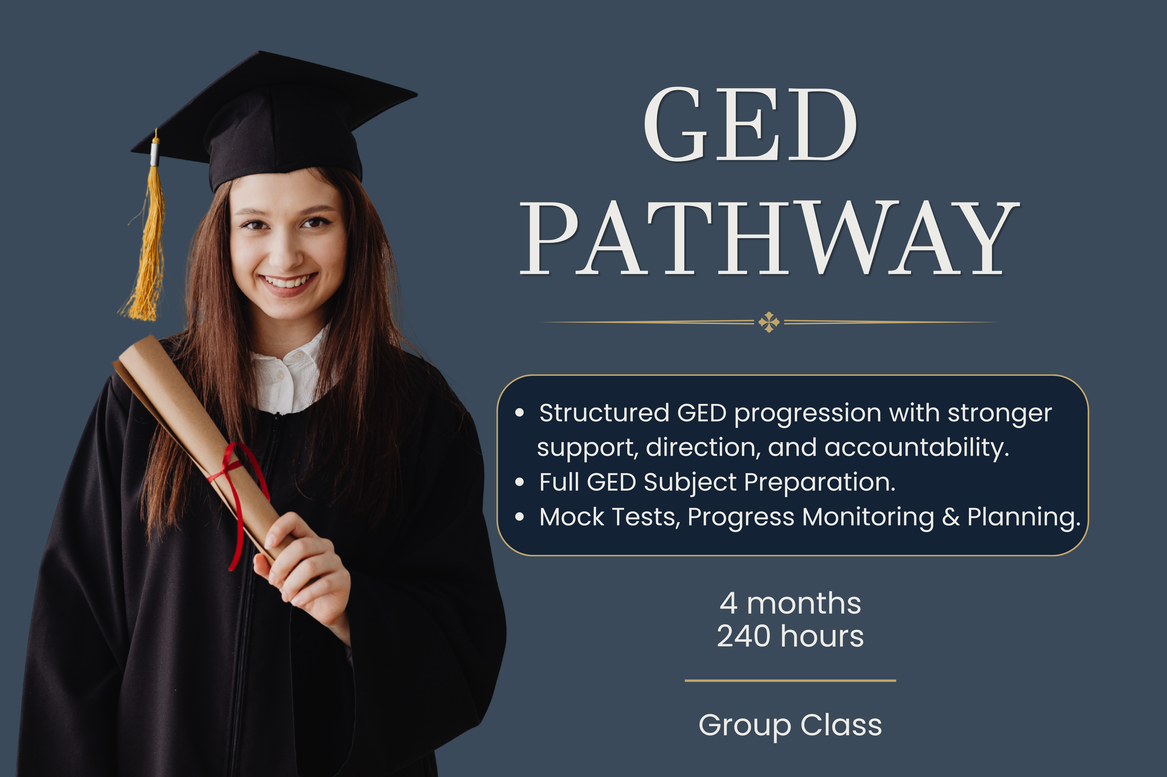
GED Pathway Program
Complete your GED, prepare for university, and move forward with direction.
Program Overview
Passing the GED is important. But for most students, it is not the final goal. The real goal is what comes next: university, a degree, a future career, and a clear academic direction.
The GED Pathway Program was designed for students who want more than exam preparation.
It combines structured GED preparation with academic development and university pathway guidance, helping students build the skills, discipline, and confidence required for higher education.
This is not simply GED tutoring. It is a structured transition program from GED preparation to university readiness.
The GED Pathway Program was created to help students prepare for the GED while simultaneously developing the habits, skills, and academic maturity needed for university progression.
Who Is This Program For?
Why GED Completion Alone Is Not Enough
Many students successfully pass the GED but struggle with what happens next.
They may have questions such as which university to choose, what program fits their goals, whether they are academically ready for university-level work, how to improve writing and independent study skills, and what to do after passing the GED.
Without direction, many students lose momentum after completing their exams.
The GED Pathway Program was created to solve that problem by combining GED preparation with university readiness development.
The Difference Between Fast Track and Pathway
GED Fast Track is designed for students whose primary goal is GED completion. It focuses on direct GED preparation, exam performance, GED readiness, and structured test execution.
GED Pathway is designed for students whose goal is GED completion and university progression.
Pathway includes everything in Fast Track plus academic writing development, independent study reinforcement, university pathway discussions, academic goal planning, structured progress reviews, and university readiness development.
The destination is different. Fast Track focuses on passing the GED. Pathway focuses on passing the GED and preparing students for what comes next.
What Makes ELS Different?
Many institutions prepare students for an exam. ELS prepares students for progression.
Every student receives structured GED curriculum, weekly assessments, timed GED practice, academic monitoring, error tracking systems, performance reviews, readiness validation, and university pathway support.
Students are not pushed toward testing because a schedule says they should be. Students move forward when readiness has been demonstrated.
What Students Will Develop
GED Academic Skills: students build competency in Reasoning Through Language Arts, Mathematical Reasoning, Science, and Social Studies.
Reasoning Through Language Arts (RLA): students develop reading comprehension, evidence analysis, vocabulary development, critical reading, constructed response writing, and extended response preparation.
Mathematical Reasoning: students strengthen algebra, equations and inequalities, geometry, data interpretation, quantitative reasoning, and calculator proficiency.
Science: students develop scientific reasoning, data analysis, evidence evaluation, graph interpretation, and experimental understanding.
Social Studies: students build source analysis, historical reasoning, civics and government concepts, economic reasoning, and evidence-based interpretation.
University Readiness Development
Success at university requires more than passing an exam.
Students must learn how to work independently, manage deadlines, read longer academic materials, organize written responses, develop study discipline, and take responsibility for their learning.
These expectations are built into the Pathway Program throughout the learning process.
Academic Writing Support
One of the most common challenges students face after GED completion is academic writing.
The Pathway Program includes structured writing development designed to strengthen paragraph organization, evidence-based writing, argument development, academic communication, and written reasoning.
These skills support both university readiness and long-term academic success.
Built Around Real Performance
The GED is not passed through memorization. It is passed through reasoning, analysis, and performance under timed conditions.
Students complete timed reading practice, timed mathematics practice, GED-style assessments, mock examinations, performance reviews, and readiness benchmarking.
This helps students build confidence before official testing.
Progress Is Measured
Every student is monitored through weekly assessments, attendance reviews, homework tracking, reading performance analysis, writing development reviews, mathematics performance reviews, timed practice monitoring, and university readiness discussions.
Families receive structured feedback throughout the program.
No Fake Readiness
At ELS, readiness is earned. Students are not approved for official GED testing simply because they completed a course.
Students must demonstrate stable attendance, consistent homework completion, successful timed practice, academic readiness, and GED Ready benchmarking.
This protects students from avoidable failures, unnecessary retests, and delayed educational plans.
What Success Looks Like
By the end of the GED Pathway Program, students should be able to handle GED-level academic work confidently, complete official GED examinations with readiness, write structured academic responses, work independently with greater confidence, demonstrate stronger study habits, understand their university options, and transition into higher education with a clearer plan.
The Goal: A Stronger Transition to University
The GED is not the finish line. It is the bridge.
The GED Pathway Program helps students move from uncertainty to direction, preparation to qualification, and GED student to university applicant.
For families seeking a more complete academic journey, Pathway provides the structure, accountability, and support required to move forward with confidence.
Start With an Assessment
Every student begins with an Assessment & Placement Evaluation.
This assessment identifies academic readiness, English proficiency, learning strengths, learning gaps, university progression goals, and the recommended pathway.
At the end of the assessment, families receive a clear recommendation based on evidence, readiness, and long-term educational objectives.
Looking Beyond the GED?
Book an Assessment & Placement Evaluation and discover whether the GED Pathway Program is the right next step toward university progression.
Structured Pathways. Managed Progress.
GED Programs
Other GED Courses
Explore related GED pathways designed for different levels of readiness, support, and university progression goals.

GED
GED Foundation
16 weeks academic rebuilding program
Know more →
GED
GED Fast Track
Direct GED preparation for ready students
Know more →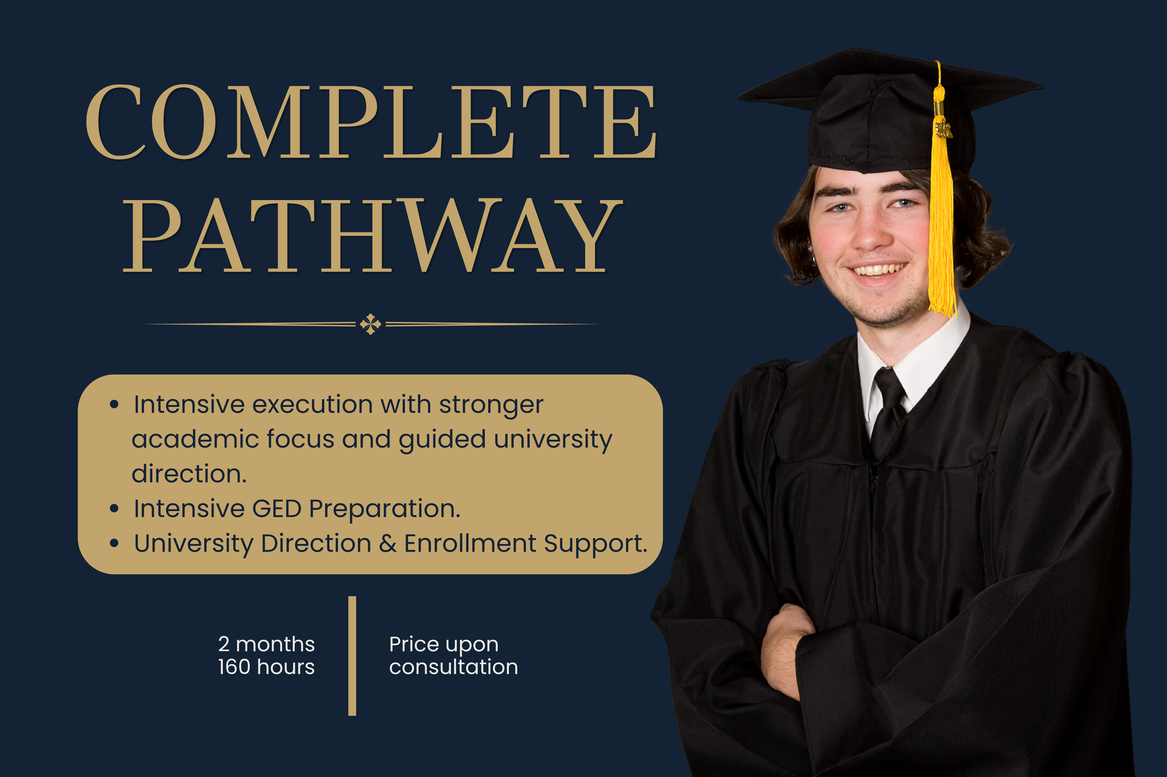
GED
Complete Pathway
Comprehensive academic and university preparation pathway
Know more →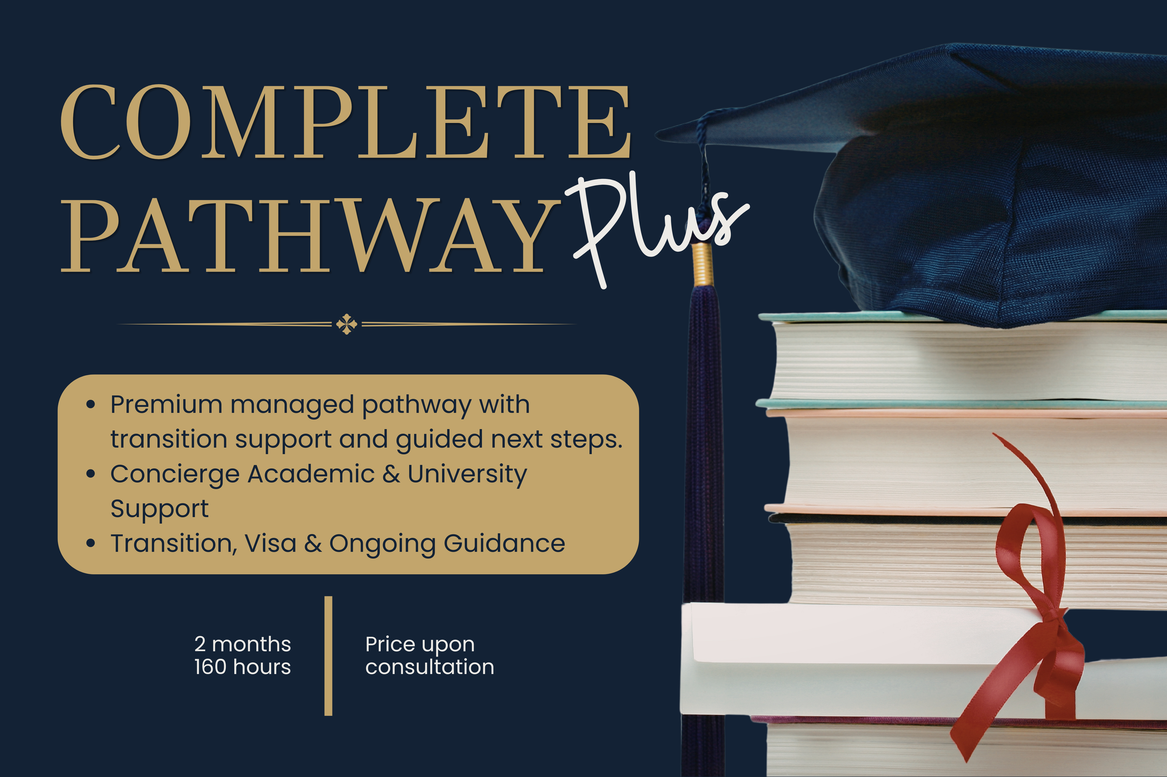
GED
Complete Pathway Plus
Extended pathway support for stronger academic readiness
Know more →